This youth-focused, innovation-driven pilot project has been designed to address one of the most complex and still insufficiently addressed challenges of the Ukrainian refugee crisis: the long-term integration and development pathways of refugee-background adolescents and young adults.
While humanitarian aid for children often focuses on immediate protection and basic services, young people fall between two systems – they are no longer passive dependents, yet not fully empowered adults. Forced displacement disrupts a crucial stage of life, when identity, a sense of belonging, confidence, agency, social networks and educational pathways are being formed.
Building a life in a new country is challenging for anyone, but young people who have experienced major disruption are in an especially vulnerable position. Through this project, the Estonian Refugee Council, Tallinn University and the Polish organisation Dobra Fabryka focus on language learning (Estonian and Polish), creating opportunities for young people (mainly aged 13–18) to develop their language skills in a safe, informal environment. In Poland, support is also provided in mathematics and English, as these subjects are key to further education opportunities.
In Estonia, the project offers Estonian language conversation groups for young people and young adults. Guided by peer mentors, participants practise the language through everyday activities such as cooking, sports and board games. A safe and non-judgemental environment helps them use Estonian more confidently, learn new vocabulary and build social connections. Linguists from Tallinn University are also studying how participants’ language use develops before and after the programme, using an “invisible language learning” methodology developed and tested by the university.
In addition, young people can take part in mental health support group sessions based on the MindSpring methodology. These sessions help strengthen coping skills, provide a safe space to share experiences, and offer support in dealing with stress, adaptation and future-related challenges.
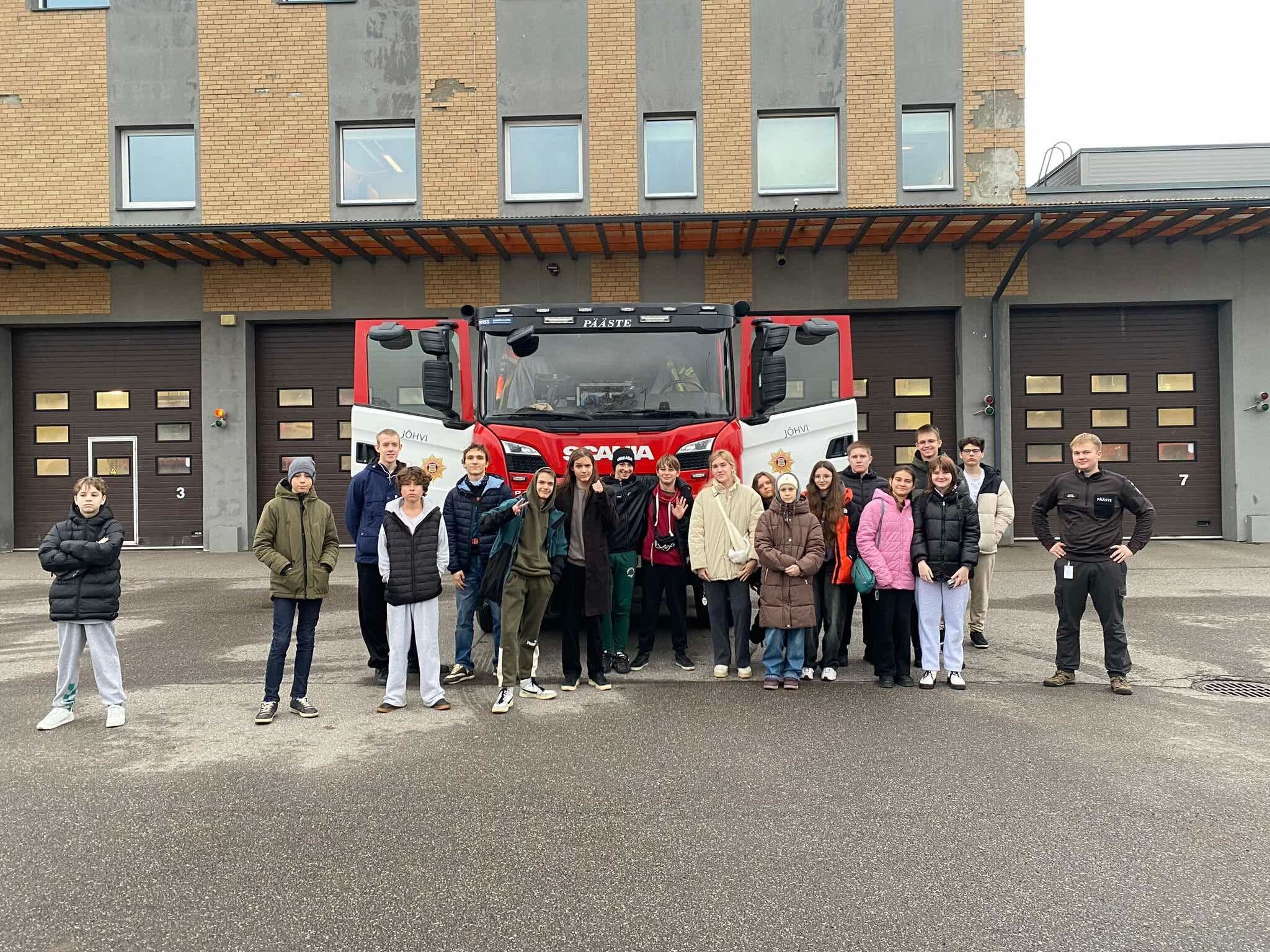
A third strand of the project includes workshops, meetings and study visits that introduce young people to education and labour market opportunities, offering inspiration and practical knowledge for making career choices. Participants meet companies from different sectors, explore study opportunities in Estonia and across Europe, and learn practical skills such as writing a CV, applying for jobs online and using artificial intelligence tools – all of which help improve their competitiveness in the labour market.
To ensure sustainability and the continuation of relevant and effective support beyond the project period, the project also includes service design, advocacy and communication activities.
The project is being implemented in collaboration with Tallinn University and the Polish organisation Dobra Fabryka. Funded by the European Union. Views and opinions expressed are however those of the author(s) only and do not necessarily reflect those of the European Union or European Social Fund Agency. Neither the European Union nor the Granting Authority can be held responsible for them.
The lead partner of the project is the Estonian Refugee Council.
Contact: Sigrid Solnik, Head of Estonian programmes, sigrid.solnik@refugeecouncil.ee
