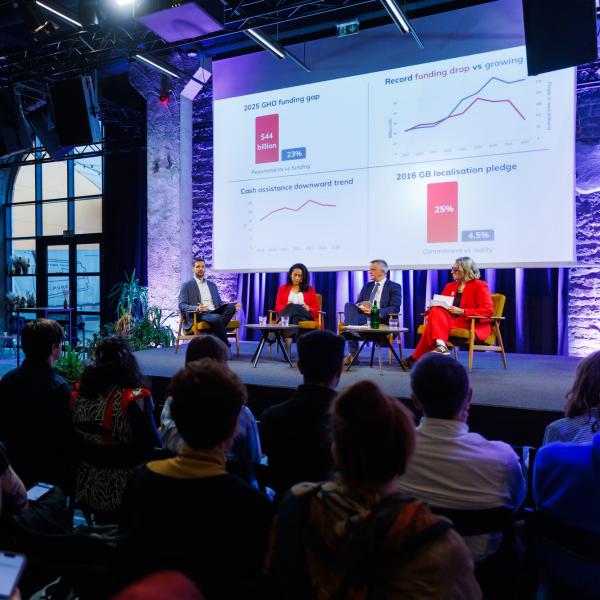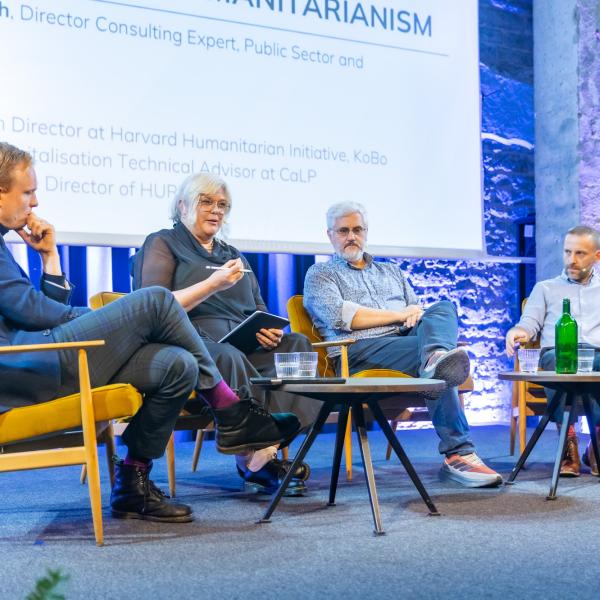

Amidst shifting geopolitical realities, shrinking humanitarian budgets, and rising global needs, organisations are being pressed to adapt faster than ever. Questions of efficiency, accountability, and innovation are now central to the debate about how humanitarian work is organised and delivered. The conference provided a space for dialogue, critique, and collective learning on how the sector can reset itself while staying true to humanitarian principles.
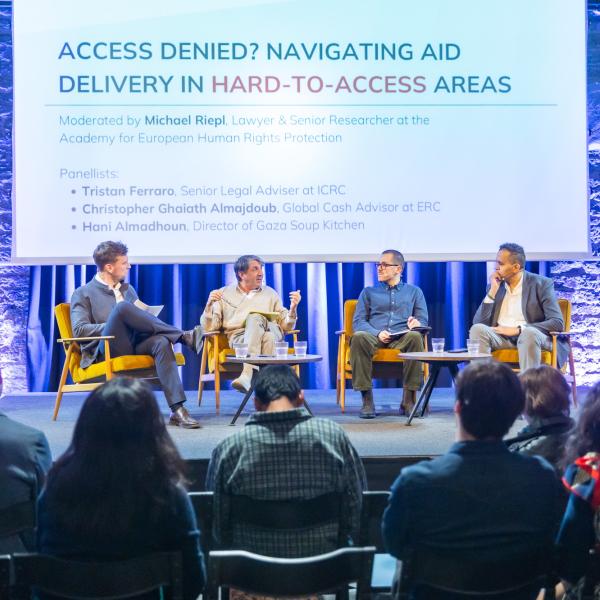
The conference featured high-level panel discussions with experts from a wide range of international humanitarian organisations. Panellists included Hans Das (Deputy Director-General of DG ECHO), Mervat Shelbaya (Head of the IASC Secretariat), Reshma Adatia (Director of Engagement at ICVA), Patrick Vinck (Research Director at the Harvard Humanitarian Initiative and KoBoToolbox), Rory Crew (Data and Digitalisation Technical Advisor at CaLP), Danna Ingleton (Executive Director of HURIDOCS), Tristan Ferraro (Senior Legal Adviser at the ICRC), Christopher Ghaiath Almajdoub (Global Cash Advisor at the Estonian Refugee Council), and Hani Almadhoun (Director of Gaza Soup Kitchen).
The panels were moderated by Eero Janson (Director of the Estonian Refugee Council), Tobias Koch (Director Consulting Expert at CGI), and Michael Riepl (Lawyer and Senior Researcher at the Academy for European Human Rights Protection).
Tallinn Humanitarian Conference is supported by ESTDEV – Estonian Centre for International Development Cooperation.
Featured topics