
Whenever crises occur that countries cannot respond to on their own, it is time for humanitarian organisations to step up. In recent decades, the international humanitarian system has faced many crises and has shown itself capable of learning and adapting. If crises highlight new systemic pain points, modern technologies and digitalisation create additional opportunities to make humanitarian aid more effective and faster.
2023 marked 25 years since Estonia changed from a recipient of humanitarian assistance to a donor. On this occasion, the Estonian Refugee Council organised the first Tallinn Humanitarian Conference. The conference focused on macro-trends: humanitarian assistance becoming more cash-based, the growing importance of data-based and digitalized approaches, and greater attention being directed to localisation of response.
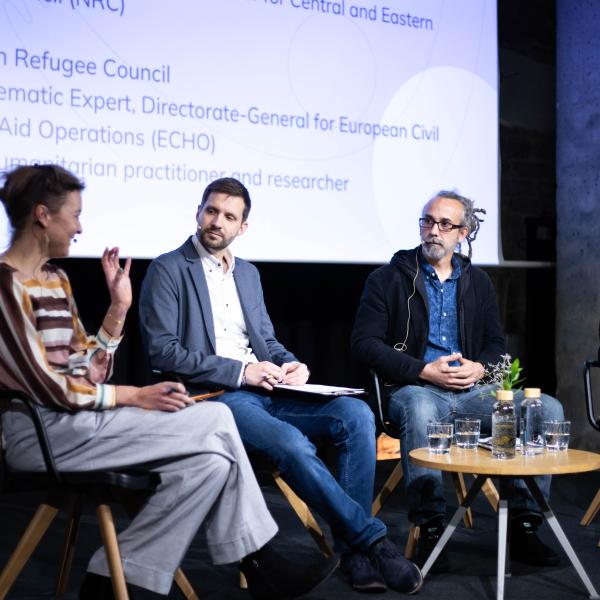
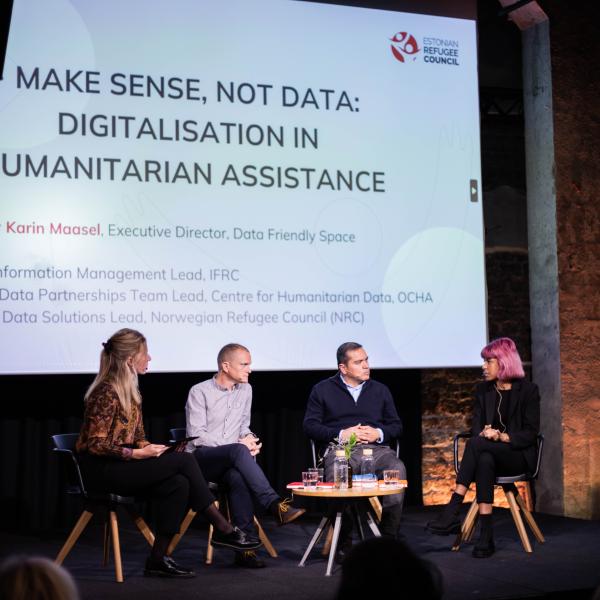
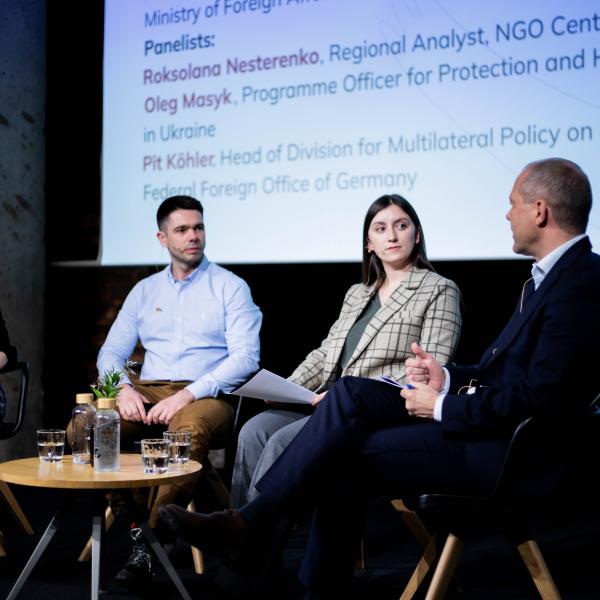
The conference featured high-level panel discussions with experts from a wide range of international humanitarian organisations. The keynote speech was delivered by Juliet Parker (Director of ALNAP). Panellists included Quentin Le Gallo (Regional Thematic Expert at DG ECHO), Javier Teran (Data Partnerships Team Lead at the Centre for Humanitarian Data, OCHA), Louisa Seferis (independent humanitarian practitioner and researcher), Luke Caley (Information Management Lead at IFRC), Zineb Bhaby (Head of Data Solutions at Norwegian Refugee Council), Roksolana Nesterenko (Regional Analyst at the Ukrainain NGO Centre for United Action), Oleg Masyk (Programme Officer for Protection and Health at the Swiss Embassy in Ukraine), Pit Köhler (Head of Division for Multilateral Policy on Humanitarian Assistance at the Federal Foreign Office of Germany), and Eero Janson (Director of the Estonian Refugee Council).
The panels were moderated by Kitty Paulus (Regional Programme Director for Central and Eastern Europe at Norwegian Refugee Council), Karin Maasel (Executive Director at Data Friendly Space), and Helen Kajuläte (Director of the Division for Humanitarian Aid at the Estonian Ministry of Foreign Affairs).
Tallinn Humanitarian Conference is supported by ESTDEV – Estonian Centre for International Development Cooperation.